











How did a brand that understands women better than the genuine products, Guangxi Bao, make its way from a small workshop to the world?

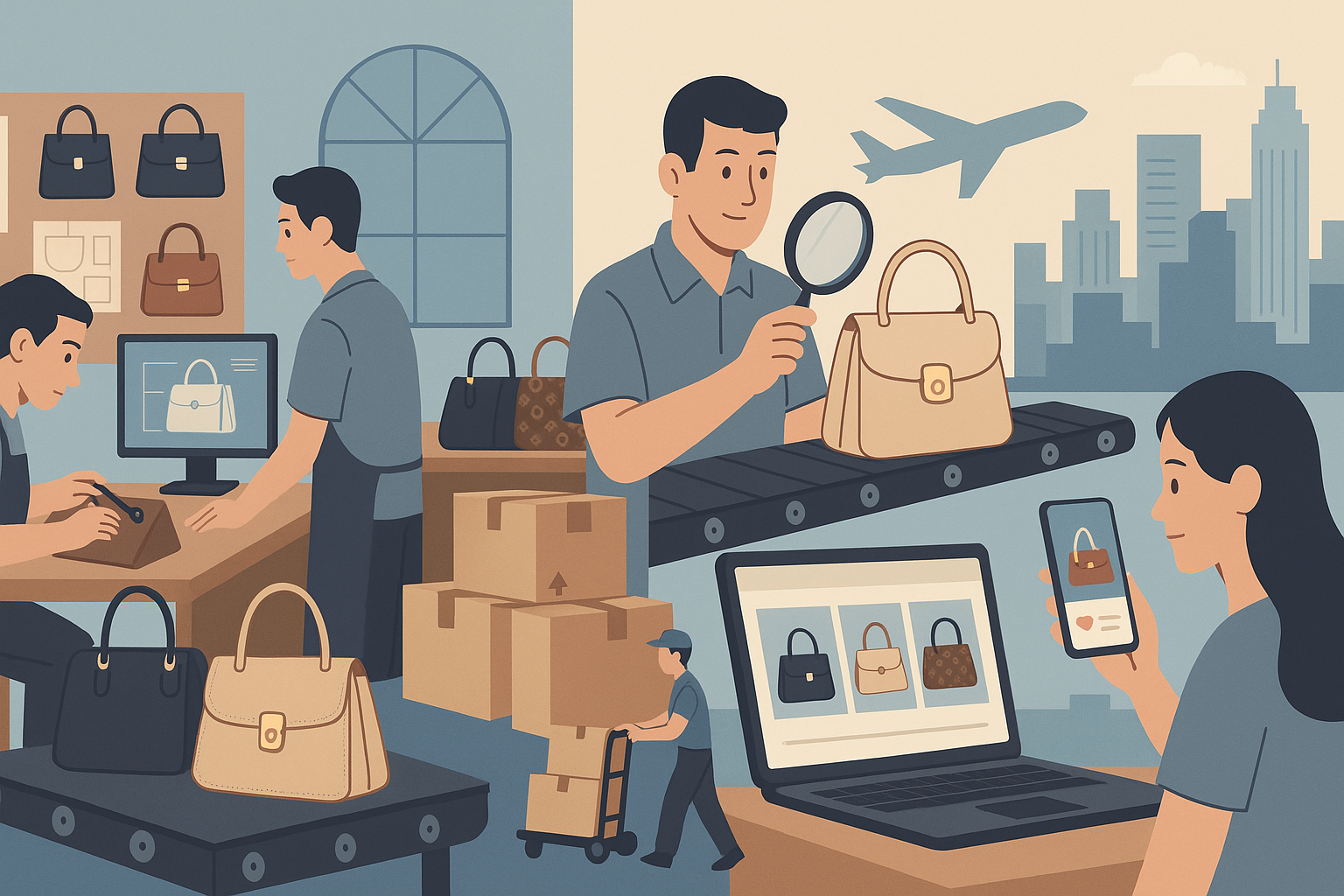
A wide range of bags that understand women better than the original products
Speaking of bags, in the current market, not only are there bags from the Guang-based production lines, but also those from places like Anshan, Yiwu, and Dongguan, all of which are produced locally. This is related to the local economic development and employment situation. Without further elaboration here, regardless of the circumstances, the craftsmanship, quality, and market share of Guang-based bags have long been ranked first in the overseas market, without any suspense. So, regarding the production system of Guang-based bags and their phenomenon of "comparable to genuine products", it is essentially a vast system that combines fashion sensitivity, craftsmanship inheritance, market acumen, and gray market logic. In previous articles, I have repeatedly mentioned that the economic model of Putian shoes was actually a product of the OEM economy in the 1990s; similarly, Guang-based bags are no exception. The cheap labor of the Chinese has always been a so-called "advantage", which has also given birth to the invincible "Made in China". The areas around Sanyuanli and Baiyun Leather City in Guangzhou were already concentrated areas for OEM (original equipment manufacturing) of brands like LV, GUCCI, COACH, etc. in the late 1990s, with a mature leather supply chain and skilled craftsmen. In the early 2000s, Guangzhou formed a three-in-one pattern of "leather manufacturing + wholesale distribution + cross-border export". Later, as Chinese labor became less cheap and cost-effective, these brand merchants began to scrutinize their expenses and shifted the cost pressure to Southeast Asia, such as Vietnam, Indonesia, and other countries, leaving a trail of feathers for China's OEM factories. To survive, these factories shifted from "white" to "gray", starting to produce "F-style", "copy", and even "original-style-to-copy", which is the origin of the so-called Guang-based bags.
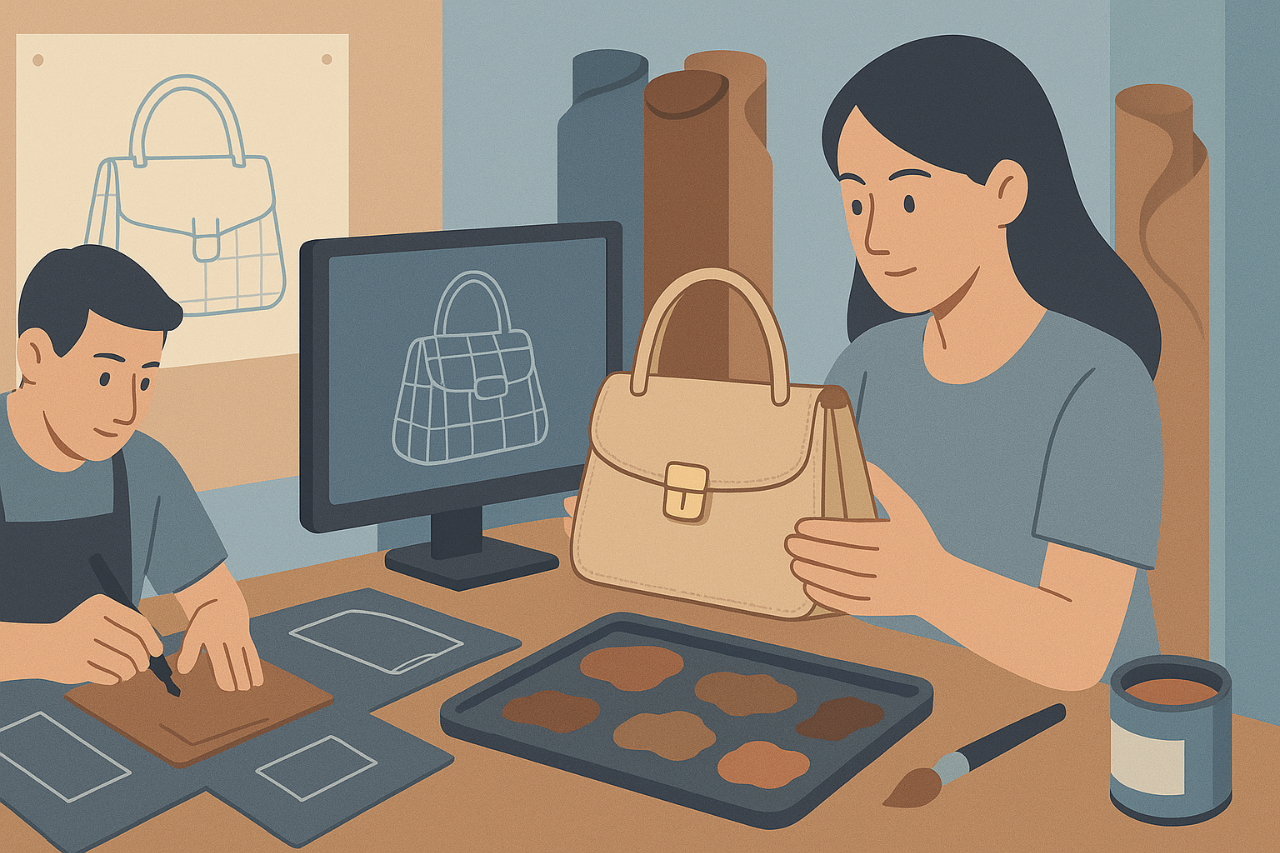
So, how is a Cantonese luxury bag, which understands fashion better than the genuine product and has craftsmanship comparable to that of department store brands, manufactured?
1) Obtaining the "original bag": Obtain new styles from counters through buyers or "purchasing channels", such as LV Pochette, Dior Book Tote, CHANEL CF series, etc. Conduct "deconstruction analysis" on the original bag: measure the leather pattern, metal piece specifications, hardware plating thickness, zipper engagement, lining texture, etc. Even the brand's internal process numbers and stitch density are recorded in a "database". 2) Mold making and pattern making: It's not just imitation, but "precision beyond". Professional pattern makers create 1:1 paper patterns based on the sample bag, 3D modeling, and laser cutting. Many experienced craftsmen come from genuine product manufacturing factories and can even "optimize" the structure, making the wide-series products more rigid and less prone to deformation than the originals. High-end studio versions even adjust the size to make them "visually proportionally more suitable for users"
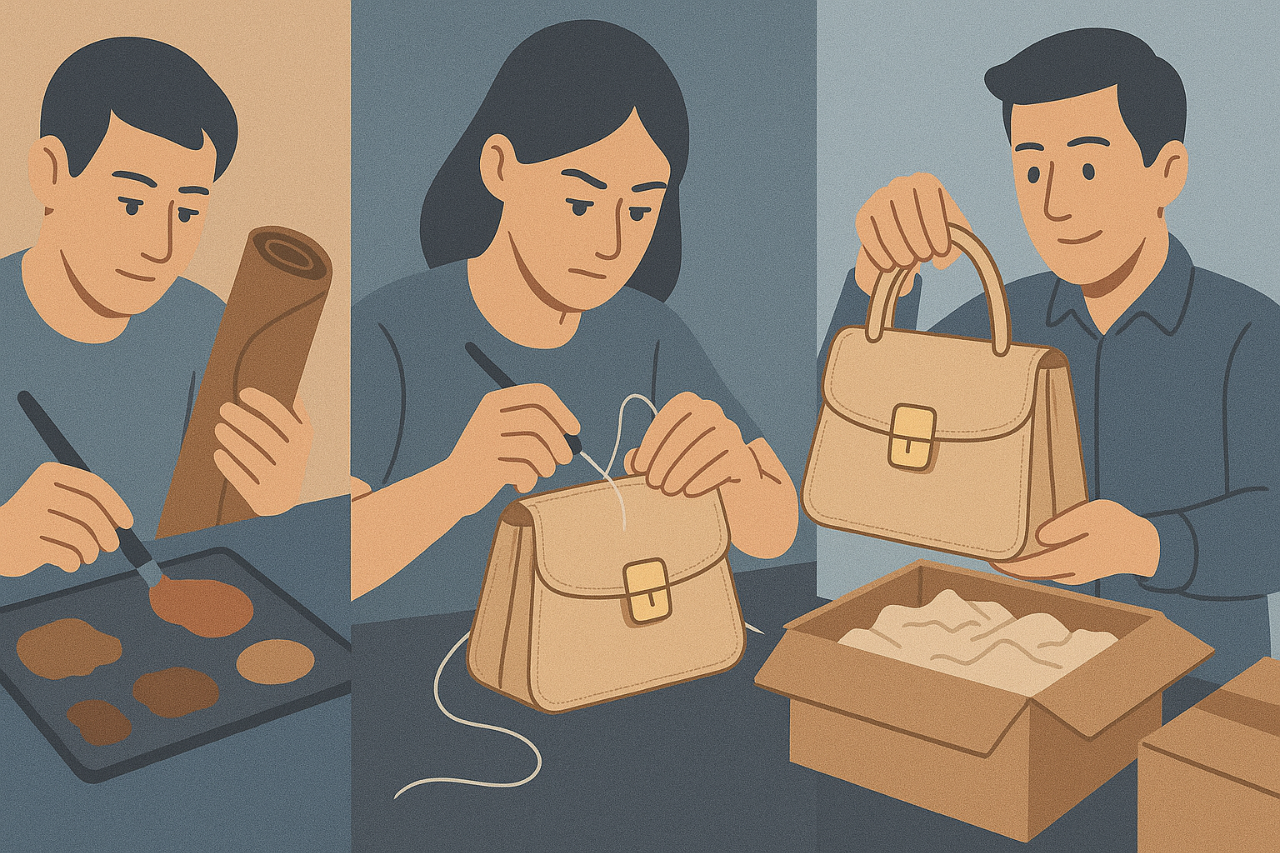
3) Material selection and leather "color matching": Top-tier Guangxi bag studios often procure imported Italian leather or use vegetable-tanned leather and embossed cowhide that are almost identical to the genuine products. Metal parts and electroplated parts are customized from the "Huangpu Hardware Market", achieving anti-oxidation testing that exceeds the original factory standards. Some Guangxi products even have "old pattern" roller plates that are custom-made through high-magnification scanning and deep carving, making it difficult to distinguish between the real and the fake at a glance.
4) Fine craftsmanship: Every stitch and thread is imitated to the extreme. Guangxi bags often adopt "small-order customization", unlike the extensive processing of assembly lines. The master sews, waxes, and edges by hand according to the "original bag craftsmanship". Some top-tier studios even require a production period of more than 5 days for each bag. Zippers need to be repeatedly polished, hardware needs to be hand-polished, and the logo imprinting on the lining uses a specialized high-temperature copper mold.
5) Packaging and "unboxing experience" replication: From dustproof bags, invoices, hangtags, to counter paper bags, instructions, Guangzhou has a complete "packaging factory chain". Some sellers can customize "counter unboxing videos", forge purchase receipts, and even have a "counterfeit product path" for scanning and verifying on the official website. They can even provide "shopping recordings" and "purchasing chat records" - what is counterfeited is not just the product, but also the purchasing experience itself.
6) Quality inspection and pre-shipment "recheck": Top-tier versions undergo a second-level recheck by "quality inspection masters" using both visual inspection and hand feel before shipment. Any issues such as "hardware scratches, leather grain skewing" are redone. Some high-end studios even follow the luxury brand process, with "shipment seals" and "coding registration", ensuring one bag has one code.
Why do some people say that generic bags are even more fragrant than authentic ones?
1) Authentic products emphasize "emotional value", while generic bags focus on "cost-effective aesthetics". Many brands charge a premium for their "stories", selling bags with a cost of several thousand for tens of thousands, but generic bags only pursue "consistent experience + affordable price". Driven by the mentality of "buying authentic is not as good as buying the right", generic bags have become a new consumption proposition.
2) "Aesthetic localization" that understands users better than authentic products. High-end generic bag manufacturers will make minor adjustments to the details of the design based on market feedback, such as thickening the hand strap, strengthening the magnetic buckle, and making the bag shape more upright. Authentic products do not change, while F-products are evolving, becoming a "better solution for user experience".
3) Alternative satisfaction of "fashion thrill". Generic bag manufacturers have strong market responsiveness, and new models can be released within a week after the launch. They can quickly sell products through collaborations with bloggers, European and American independent websites, and purchasing agents, forming a closed loop of "visual impact and fashion satisfaction". Even some boutique owners will sell high-end generic bags in large quantities, using them as "visual display samples"

71 Pilgrim Avenue
Chevy Chase,
MD 20815